Navigating the Tide of Tomorrow
Charting an Innovative Course for Caribbean Maritime Excellence
Building a vibrant, self-reliant island economy begins with a clear vision and blueprint for regional connectivity.
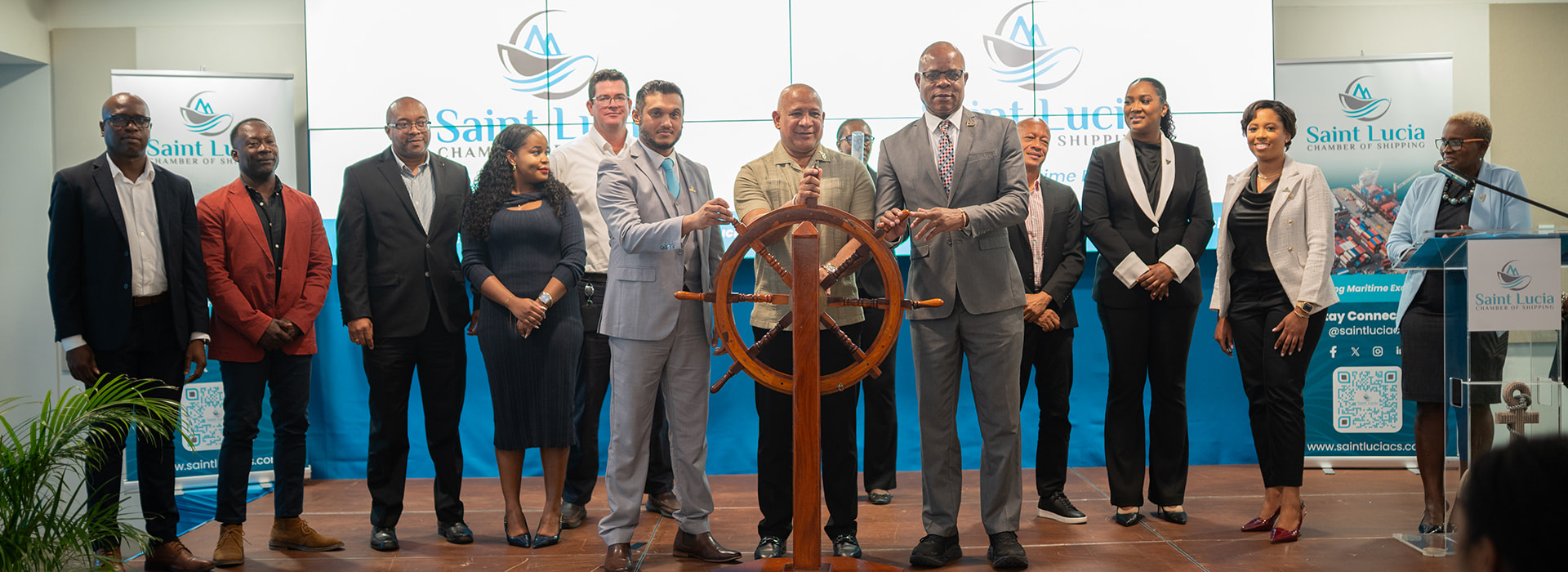
Since commencing its operations in March 2025, the Saint Lucia Chamber of Shipping has established itself as the unifying entity capable of bringing together and transforming the nation’s vital ocean assets into an engine of economic growth.
“We have a mandate to unify the maritime sector, which involves bringing all stakeholders under one umbrella to advance proper maritime development and resilience as it pertains to our infrastructure and operational frameworks,” Chamber CEO Tariq Khan explains.
The Chamber deals with all aspects of maritime, not just shipping and logistics, but also the environmental aspects involving the safe use and preservation of Saint Lucia’s coasts and shores as well.
Addressing critical operational gaps originally flagged by a 2016 International Maritime Organization audit, the Chamber has taken a necessary commanding leadership role in driving full international compliance and modernizing infrastructure due to Saint Lucia’s heavy reliance on tourism and daily imports.
This involves orchestrating the establishment of a modern maritime authority and an open ship registry, while implementing more digital processes to eliminate port bottlenecks and double inter-regional trade from 10% to 30%.
Simultaneously, the Chamber is transforming the domestic market by organizing independent, artisanal pirogue fishermen into large-scale commercial vessel collectives, spearheading sustainable manufacturing for high-value canned exports, and laying the groundwork for a world-class maritime university right on the island.
This proactive organization ultimately seeks to manifest a fully digitalized, green ecosystem where Saint Lucia stands as the gold standard of maritime excellence for the entire Caribbean region.
A Vision for Regional Unity
As a country that relies extensively on tourism and international imports for its daily survival, Saint Lucia’s maritime industry has historically been a fragmented sector.
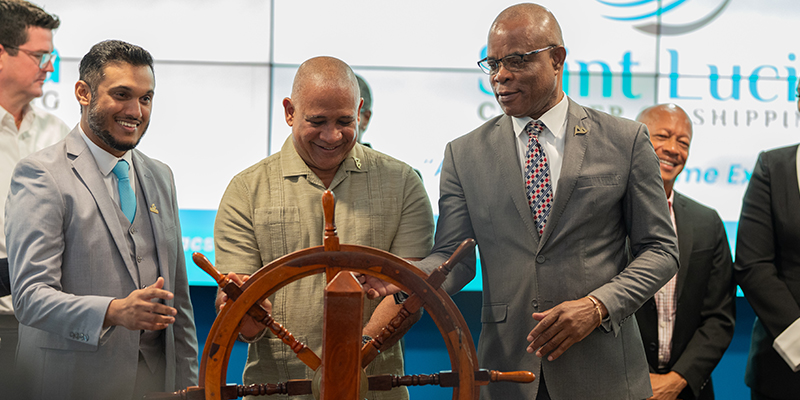
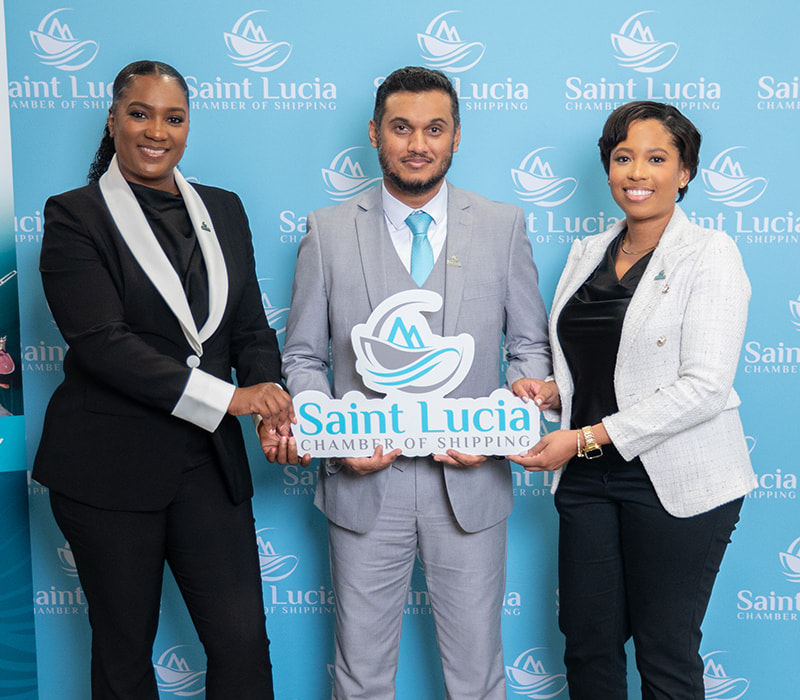
The Saint Lucia Chamber of Shipping was formed to act as the critical glue needed to bring everything together, selecting its inaugural board of directors and securing specialized consultants to guide its foundational development.
A primary catalyst for the organization’s active intervention stems from an International Maritime Organization audit conducted in 2016. This evaluation highlighted significant regulatory and operational gaps that needed urgent attention.
While the Saint Lucia Airports and Seaports Authority has successfully resolved several of these issues over the years, the Saint Lucia Chamber of Shipping is now stepping in to drive the remaining compliance processes to completion.
“The overall aim is to ensure that once we have the compliance, Saint Lucia will fit the bill to not only be an international player in the maritime sector but to become the gold standard for the entire region as well,” Khan says.
As it undertakes all of its projects and policies, the Chamber’s approach comes with an environmental component as well, focusing on ways to utilize renewables, like hydrogen and wave energy, and reduce greenhouse gases and the nation’s reliance on fossil fuels as much as possible.
Digital Transformation and the Modern Single Window
In conjunction with the environmental focus, the Chamber is also focusing on administrative efficiency, which requires moving away from slow, paper-based practices and adopting agile, modern technology.
“We’re looking to modernize all our processes at our ports and establish a maritime single window,” Khan states, explaining that having a digital framework will undoubtedly streamline trading processes, remove bureaucratic bottlenecks, and facilitate the frictionless movement of goods and services across the Organization of Eastern Caribbean States.
The Chamber is actively designing custom software and upgrading hardware systems to eliminate the long delays that have traditionally slowed down port operations.
This technological shift is designed to be entirely seamless, moving port clearances from manual offices directly onto secure mobile applications, allowing vessels, containers, and commercial cargo to be cleared in minutes rather than hours.
Beyond improving administrative speed, this digital modernization is deeply tied to a broader regional trade strategy.
The Chamber is conducting thorough feasibility studies to accurately measure national export volumes and analyze trade patterns across neighboring islands.
“Once these volumes are clearly defined by the feasibility study, we’ll be able to determine the exact type of vessel and the schedule orientation we need to make this economically viable,” Khan says.
This data-driven approach will optimize regional connectivity for agricultural produce and manufactured goods while boosting the current inter-regional export rate from a modest 10% to an ambitious 30% percent, helping to reduce the region’s heavy reliance on extra-regional imports.
Optimized Infrastructure and Diversified Assets
While Khan and his team seek to progress through invested developments, they also understand the importance of maximizing existing resources to avoid taking on heavy debt.
“We certainly have underutilized assets. Instead of trying to find additional capital to increase port availability in Castries or Cul de Sac, we can leverage a very underused port in Vieux Fort and develop our road networks to make it more feasible to ship to Vieux Fort and establish that area as a transshipment hub.” Khan says.
Vieux Fort is just one of the many examples of hidden assets that can help the country expand its total maritime capacity without incurring high infrastructural debt.
This disciplined approach to managing assets is particularly critical as rising global oil prices continue to drive up the cost of building materials, food, medicine, and road logistics.
However, there is still a silver lining here, as rising oil costs have prompted the Chamber and Saint Lucia’s markets in general to turn their attention to greener, more renewable energy sources.
“Using maritime assets to generate energy is a win-win in itself because you’re already looking at a reduced cost to the production of this energy. Yes, there may be a high capital cost at the beginning, but there are ways to mitigate that, and I think the benefits far outweigh the costs,” Khain says, explaining that overall, moving away from reliance on fossil fuels will create an economic buffer against the surges that price volatility tends to create across all of Saint Lucia’s sectors.
And this is a sentiment shared not just by maritime organizations.
For example, forward-thinking automotive businesses, like JQ Motors, are already phasing out internal combustion engine vehicles in favor of hybrid and fully electric options.
When combined with the alignment of onshore transport shifts and optimized offshore logistics, it becomes clear that the Chamber is steadily moving Saint Lucia towards a highly sustainable, low-carbon economic model.
Setting the Standard for Future Food and Maritime Security
The path that the Chamber has set for Saint Lucia bodes well for the future. By 2035, the relationship between maritime logistics and energy production will serve as a major driver of regional growth and innovation.
The organization’s long-term vision focuses on developing green ports that operate entirely off the grid, utilizing clean energy sources like wave action, hydrogen, and geothermal power to meet their operational needs and even feed surplus power back into the national grid.
This focus on clean energy will also extend to regional trade fleets, with plans to lease advanced cargo vessels designed to run on hydrogen and other renewable alternatives, significantly reducing the industry’s total greenhouse gas emissions.

This maritime strategy also includes a plan to restructure the local fishing industry, transforming small, independent artisanal operations into organized collectives.
“Instead of having the owners of small fishing vessels or pirogues operating on an independent basis, we’re planning to get them involved in the ownership of larger vessels that can be out on the water for much longer, for as much as a week or two,” Khan clarifies.
These modern vessels will feature advanced refrigeration systems to preserve catches efficiently, lowering daily fuel consumption compared to traditional day-tripping boats.
From a national perspective, that’s an absolute logistical upgrade that will directly support national food security by supplying local manufacturing facilities with a steadier stream of raw products to create value-added exports, such as high-quality tuna fillets, seasoned vacuum-sealed seafood, and processed fish items.
There’s also immense potential to expand into specialized regional markets like exporting sea urchins to Martinique and shipping premium seafood to the European Union and the United Kingdom, which would help diversify Saint Lucia’s economy beyond tourism with reliable alternative revenue streams.
Lastly, to address the legal, safety, and operational gaps first identified in the 2016 international audit, the Saint Lucia Chamber of Shipping has made professional development a top priority.
“You can put as much money into frameworks and infrastructure as possible, but if you don’t have the people needed to run them, you’ll remain in the same place. So, part of the Chamber’s mandate is to establish a maritime university to help cater to all of the gaps that currently exist in our state,” Khan confirms.
With a 2035 establishment goal in mind, this institution will be designed to serve as the gold standard for maritime training and professional certification across the entire Caribbean.
This upcoming educational center will provide specialized training in international maritime law, safety compliance, and advanced navigational security, ensuring local professionals are fully equipped to manage the region’s waters.
Rather than relying on external talent to oversee local ports, the country will cultivate its own generation of highly skilled maritime experts.
By combining digital port systems, optimized shipping routes, and a world-class training academy, the Saint Lucia Chamber of Shipping is building a comprehensive, self-sustaining ecosystem designed to guide the island nation toward lasting economic independence and maritime leadership.
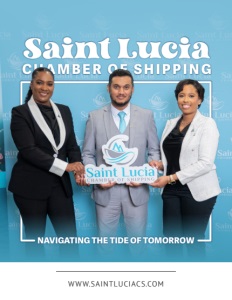
AT A GLANCE
Who: Saint Lucia Chamber of Shipping
What: The definitive unifying umbrella entity for Saint Lucia’s maritime sector
Where: Serving the entire island nation of Saint Lucia
Website: www.saintluciacs.com
PREFERRED VENDORS/PARTNERS
Saint Lucia Chamber of Shipping : www.saintluciacs.com
The Saint Lucia Chamber of Shipping is the newly established industry body dedicated to representing and unifying the maritime and shipping sector in Saint Lucia. As resilient supply chains, sustainability, and the blue economy gain global focus, the Chamber provides a platform for stakeholders to collaborate, advocate, and support national and regional development.
DIG DIGITAL?