Building Beyond Concrete
Redefining Project Delivery, Financial Discipline, and Sustainable Development in Jamaica
In an industry often defined by steel, schedules, and site deadlines, the real story of construction is rarely about what rises from the ground. It is about what happens behind the scaffolding. It is about the decisions that determine whether a structure becomes a landmark or a liability, whether a company adapts to changing times or becomes anchored in tradition.
For more than three decades, Telfie Construction has been shaping the built environment across Jamaica, carving out a reputation in civil engineering, infrastructure works, commercial development, residential construction, and water management. Established in April 1991 under the leadership of Managing Director Trevor Brown, the company has steadily evolved alongside the country’s growing demand for modern, resilient infrastructure. Today, however, the story of Telfie is no longer simply about construction. It is about transformation.
At the center of that transformation is Project Manager Janelle Samuels, whose perspective offers a revealing look into a company balancing legacy expertise with the realities of modern project delivery. From multimillion-dollar residential builds in the hills of Kingston to ambitious commercial developments in the heart of the city, Telfie is quietly positioning itself not just as a builder, but as a business intent on redefining how construction works in the Caribbean.
Foundations Built Over Time
When Samuels speaks about Telfie Construction, she speaks with the measured confidence of someone who understands that longevity in construction is never accidental. It is earned through consistency, adaptation, and the ability to read an industry before it shifts.
The company’s portfolio spans civil engineering and infrastructure, building construction, renovation projects, and wastewater management. Over the last several years, its focus has increasingly shifted toward commercial development, with roughly seventy percent of its recent work concentrated in that sector. The remaining thirty percent continues to serve the residential market, where Telfie’s reputation for quality execution remains firmly intact.
Samuels, who joined the company in early 2023, entered an organization with an established identity but one still willing to evolve.
“We try to bring renewable and sustainable thinking into every build,” Samuels relays.
That philosophy has become increasingly important in a region where environmental resilience, energy efficiency, and sustainable development are no longer optional considerations. They are commercial necessities.
Reimagining Residential Construction
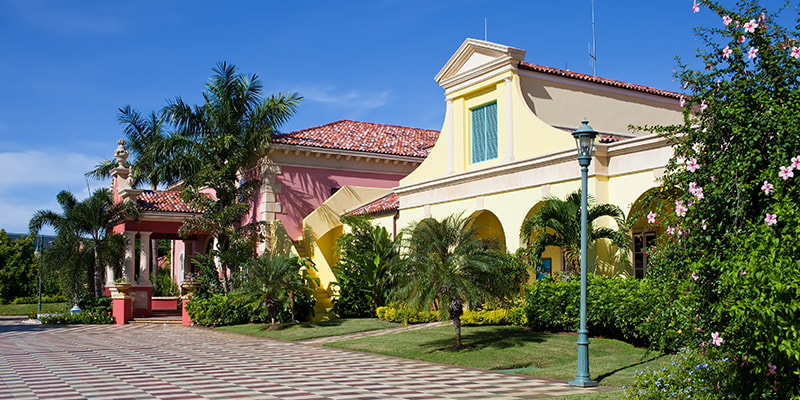
Among the projects Samuels is most proud of is a recently completed luxury residential development in Beverly Hills, Kingston. Valued at approximately 300 million Jamaican dollars, the project required more than construction expertise. It required precision, collaboration, and the ability to work within existing site constraints.
An older structure occupied the property before construction began, requiring a complete demolition before the new build could take shape. Working within the same footprint, Telfie delivered a three-storey contemporary home designed for a modern family. Over nearly two years, the company coordinated labor, equipment, materials, architects, surveyors, and engineering consultants to bring the vision to completion.
For Samuels, the project represented more than successful delivery. It represented trust.
In residential construction, clients often approach projects with deeply personal expectations. Unlike commercial developments, where function may dominate form, homes demand emotional understanding alongside technical execution. Telfie’s ability to balance those priorities has helped sustain its reputation in Jamaica’s high-end residential market.
Scaling Up in Commercial Development
If residential construction demonstrates craftsmanship, Telfie’s commercial portfolio reveals its scale.
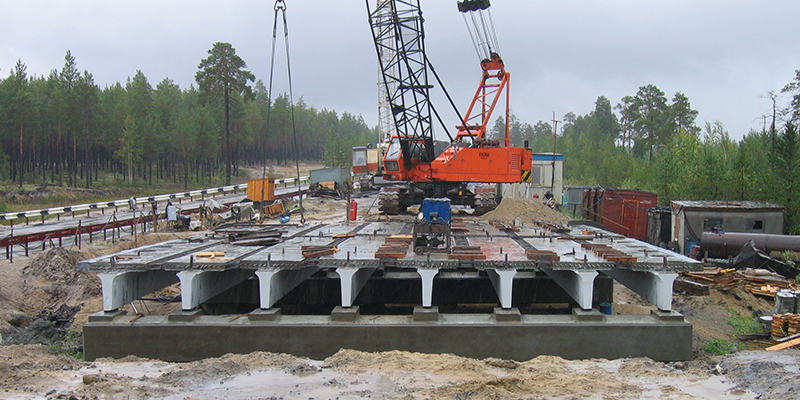
One of its most recent commercial achievements is an eight-storey mixed-use building located on Trafalgar Road in Kingston. The project included three basement levels, integrating water storage systems, stormwater infrastructure, mechanical systems, and underground parking.
What made the project especially unique was its delivery model. Approximately sixty percent of the structure was completed in cold-shell condition, leaving office interiors intentionally unfinished so future owners could customize their spaces according to their operational needs. Telfie completed all core systems, public areas, mechanical, electrical, plumbing, fire safety, elevator systems, and solar integration before handover.
The approach reflects a company increasingly aware of changing commercial expectations. Developers want flexibility. Tenants want customization. Investors want buildings prepared for long-term adaptation.
For Telfie, delivering a structure is no longer enough. Delivering possibility has become part of the product.
A Digital Shift in a Traditional Industry
Construction in Jamaica has historically been relationship-driven, heavily dependent on face-to-face meetings and traditional communication methods. According to Samuels, that culture remained largely unchanged until recent years.
Then the pandemic changed everything.
Like many businesses worldwide, Telfie found itself forced to reassess how it communicated, coordinated, and operated. Virtual meetings, digital collaboration platforms, logistics software, and emerging AI-assisted systems quickly moved from optional conveniences to operational necessities.
“Technology was not something the company paid keen attention to… not until recent years,” Samuels States.
Today, the company uses digital tools not only for internal collaboration but also for international procurement. With roughly forty percent of certain construction materials sourced from overseas markets such as China, real-time translation software and digital procurement platforms have become essential in reducing delays, improving supplier communication, and managing costs more effectively.
For an organization rooted in decades of traditional practice, the shift represents a cultural evolution as much as a technological one.
Building Through Supply Chain Pressure
Few sectors have felt global disruption as intensely as construction, and Jamaica has faced unique regional challenges.
Samuels explains that while Telfie sources approximately eighty percent of its workforce locally, labor remains only one part of the equation. Material shortages, transportation disruptions, and weather-related impacts have placed increasing pressure on project timelines and budgets.
Recent hurricane activity across the region has affected aggregate availability, including sand, stone, and concrete supply. In response, Telfie has expanded its procurement strategies, working with neighboring Caribbean markets such as Guyana and Trinidad and Tobago to stabilize access to critical materials.
This regional approach reflects both practicality and foresight. Importing from farther global markets may provide volume, but regional partnerships can offer speed, familiarity, and reduced volatility.
For a company operating in a dynamic island economy, flexibility is no longer a competitive advantage. It is survival.
The Next Frontier: Financial Intelligence
Perhaps the most revealing insight from Samuels has little to do with cranes or concrete.
It has to do with accounting.
Since joining Telfie, Samuels has identified what she believes may be one of the construction industry’s most overlooked challenges: project-level financial visibility.
Too often, she says, contractors focus on contract values without understanding whether individual projects are genuinely profitable. Revenue may look impressive on paper, but without accurate tracking of labor, materials, financing costs, vendor obligations, and procurement exposure, profitability can quickly disappear.
Samuels is now helping lead efforts to introduce systems that allow each project to function as its own financial ecosystem.
“At the end of the day, this is a business after all, and we do want to make a profit,” Samuels states.
Her vision includes digital dashboards capable of monitoring material consumption, procurement thresholds, cost overruns, financing obligations, and profitability indicators in real time. Much like automated trading systems alert investors to market risk, Samuels wants Telfie’s management team to receive early warning signals before a project begins eroding margin.
It is a forward-thinking approach rarely discussed openly in construction circles, yet increasingly essential as projects grow more complex and margins grow tighter.
Building with Greater Responsibility
As Jamaica’s construction industry continues to modernize, health, safety, and environmental accountability are becoming central themes.
Samuels believes the pandemic also reshaped how construction leaders think about community impact, worker safety, and long-term environmental stewardship. Practices once considered acceptable are now being reevaluated against international standards.
Developers are asking different questions. Communities are demanding different answers.
Where older generations may have prioritized speed and delivery, today’s construction leaders are increasingly forced to consider land use, sustainability, public safety, and community integration as part of every project lifecycle.
For Telfie Construction, this cultural shift may ultimately prove as significant as any commercial expansion.
Building What Comes Next
After more than thirty years in business, Telfie Construction stands at a compelling crossroads.
Its legacy is already visible in roads, buildings, infrastructure, and communities across Jamaica. But its future may be defined not by what it builds, but by how it builds. Through technology adoption, regional partnerships, financial accountability, and sustainable development, the company is positioning itself for a new era of Caribbean construction.
For Samuels and the team around her, progress is not measured solely in square footage or contract value.
It is measured in whether the business itself is stronger after every project, more efficient after every challenge, and more prepared for the next generation of construction leadership.
If concrete creates the structure, vision is what gives it staying power.

AT A GLANCE
Who: Telfie Construction
What: A leading construction company with local expertise and a host of projects in the works
Where: Kingston, Jamaica.
PREFERRED VENDORS/PARTNERS

Creative Building Finishes : www.creativebuildingfinishes.com
Celebrating over 25 years in Jamaica’s construction and home improvement industry, Creative Building Finishes supplies premium tiles, bathroom fixtures, kitchen finishes, and installation solutions. With locations in Kingston and St. Ann, we are committed to quality products, exceptional service, and helping customers create beautiful residential and commercial spaces.
DIG DIGITAL?