Modernizing Water and Waste Management
Bridging Islands through Sustainable Caribbean Water Governance
The Caribbean water and waste management grid is undergoing a significant transformation.
Under astute leadership, the sector is steadily heading towards a future supported by alternative water sources, improved infrastructure maintenance, and sustainable financing models.
One of the core entities driving that change is the Caribbean Water & Sewerage Association (CAWASA).
Acknowledged as the official successor to the Caribbean Basin Water Management Program, CAWASA now serves as a regional network of publicly owned water utilities across the Caribbean islands.
Unlike its predecessor, based in Barbados, CAWASA is headquartered in St. Lucia and has evolved significantly in structure and membership since transitioning from a project to a formal association in 2010.
The association’s membership is predominantly composed of some of the region’s flagship utility providers.
Notable members include St. Lucia’s Water and Sewage Co. Ltd., Grenada’s National Water and Sewage Authority, the Antigua Public Utilities Authority, St. Vincent’s Central Water and Sewage Authority, Belize Water Services Limited, and the Turks and Caicos Public Works Department.
While many members are publicly owned statutory or government bodies, several notable privately held commercial entities also belong, including Florida Aquastore, DLB Engineering, Water Fit, and Irwin Gill Training and Consultancy Ltd.
The association is governed by a Board of Directors that is duly elected every three years and follows a very industry-centered core mandate.
“Our purpose is to facilitate collaboration, knowledge sharing, networking, and cooperation in the water sector,” says CAWASA Executive Director Ignatius Jean, noting that one of the primary channels of support is employee development.
“We offer training workshops, online training, webinars, and internships,” he says, adding that due to the association’s affiliation with Water Professionals International, it is also able to offer training for WPI Operator Certification as well.
Resilience at the Center of the Sector
CAWASA’s focus on workforce and skill development is driven mostly by the needs of the region it serves.
Because of the hazardous weather and climate conditions that the Caribbean is known for, sturdy infrastructure and proper disaster management are critical, so a central goal of the association is to equip the industry’s workforce with the resources it needs to ensure excellence in these two areas.
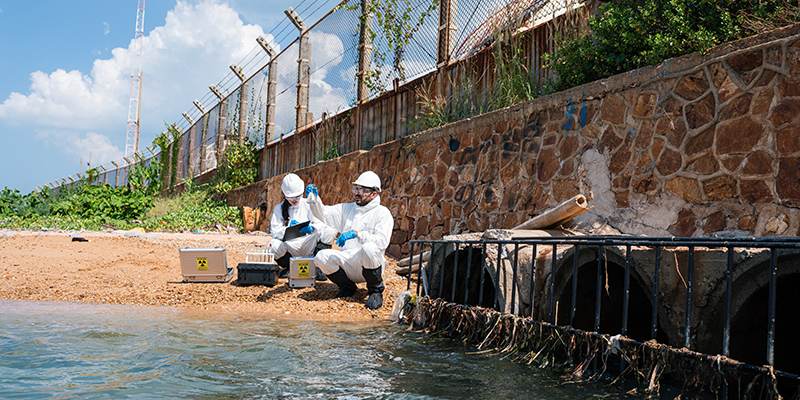
CAWASA collaborates with the Caribbean Disaster Emergency Management Agency, the Caribbean Water and Wastewater Association (CWWA), and UNICEF to form what is called the Caribbean Water Utilities Insurance Collective.
Thanks to the support of organizations like the Inter-American Development Bank and Caribbean Development Bank, the collective can provide Caribbean water and wastewater utilities with formalized disaster risk financing and management that combines emergency response, parametric insurance, and resilience funding.
Additionally, CAWASA also maintains a very proactive perspective regarding utility infrastructure.
“Infrastructure resilience is a strategic priority for us, as it directly impacts organizational survival, economic stability, and public trust,” Jean confirms.
Realistically, a failure in the water sector would trigger a domino effect that would instantly cripple several key industries like healthcare and tourism, along with the livelihoods of entire communities.
Knowing this, CAWASA’s policy is to continuously invest in the maintenance of its infrastructure and, in the event of a climate-based failure, to “build back better” and invest in systems post-disaster specifically designed with reinforced resilience in mind.
“Some areas, due to aging infrastructure, have a high incidence of failures, so that often means that we have to look at the materials being used and find a more resistant alternative,” Jean says, pointing to the replacement of galvanized pipes, which are prone to saline intrusion, with high-density polyethylene pipelines as a primary example.
The Technology Behind the Infrastructure
While resilience is incredibly important, it is still only part of the large picture of CAWASA’s governance.
The reduction of water loss, otherwise known as non-revenue water, is also a key area the association focuses on, which is accomplished through leveraging key utility technologies.
The association’s ongoing efforts include modernizing water systems through advanced metering hardware, digitalization, and alternative energy adoption.
“You can’t manage what you don’t measure, so most of the utilities in the region rely on metering to manage water loss not just at the customer end but within their transmission lines as well,” Jean says.
Water loss reduction programs are now implemented within many utilities, which employ district metering areas and bulk meters to measure and control non-revenue water and improve revenue capture.
Additionally, some utilities have made large strides in digital integration, featuring control centers that can remotely manage and track their systems, with future goals to incorporate more robust AI-based system monitoring.
Jean describes the integration of AI as “a work in progress,” noting that one of the biggest factors in the feasibility of such advancements is the region’s energy dependence on fossil fuels, and more importantly, the costs of that dependence.
“Electricity often costs upwards of 30 to 40% of the operational expenditure of these utilities. So, many utilities are now considering alternative energy platforms to reduce their, and ultimately the customer’s, direct costs,” Jean explains.
The Challenges of Wastewater Reuse and Advancing the Industry Scale
The other half of the renewable energy discussion revolves around sustainability, and while it is something being discussed, there are several industry hurdles that need to be addressed.
The biggest hurdle is the region itself.
Wastewater reuse exists at a limited scale in the Caribbean, and full-scale waste-to-energy projects are the hardest to implement because Caribbean populations are scattered and relatively small.
For example, within the tourism industry, hotels sometimes have their own packaged treatment plants and engage in wastewater treatment for irrigation purposes.
However, they don’t happen anywhere near the volumes needed for substantial waste-to-energy conversion.
“In the Caribbean, there aren’t many companies that have centralized sewage systems as you’d find in America and other metropolitan countries,” Jean says, stating that the costs of implementing the necessary infrastructure for centralized sewage facilities across the region would be incredibly expensive.
However, there are still strides being made. In Barbados, the Three Cruise Project, funded by the Green Climate Fund, is upgrading a major wastewater treatment plant from a secondary to a tertiary treatment level, enabling irrigation reuse and aquifer recharge.
The facility will also be equipped with renewable PV systems to reduce energy costs.
Similarly, nature-based solutions that utilize constructed wetlands for cost-effective wastewater treatment are being explored in areas like Saint Lucia, Dominica, Cuba, and Martinique.
Advancing Toward the Future of Caribbean Water and Wastewater
Beyond the reuse and waste-to-energy conversation, simply increasing the scale of the current water sector also introduces a few obstacles that are, again, tied to the region itself.
“Advancing water and wastewater processing to a large scale across the region would introduce some structural, geographic, and economic challenges,” Jean states, indicating geographic fragmentation as the most obvious.
However, you then have to factor in economic constraints, such as energy costs and the tourism-driven demand peaks that usually align with the region’s dry seasons. This dynamic often results in supply strains, as peak water use coincides with low freshwater reserves, which ultimately places a strain on infrastructure that is designed for lower demand.
So, it’s safe to say that the Caribbean Water and Wastewater industry has a long road to advancement ahead; however, CAWASA leadership is already prepared to guide the region’s utility providers along that journey.
“For the future, I think what most countries and water utilities must do is establish a more reliable water supply… and what that really requires is for us to look at alternative sources of water supply first,” Jean states, encouraging practices like individual rainwater storage and exploring seawater reserves more deeply, which directly counters consumer overreliance on utilities.
“It’s an expensive venture, but I think there’s maybe a higher cost to pay if we don’t go in that direction next and mitigate the increasing scarcity of fresh water supply systems,” he explains.
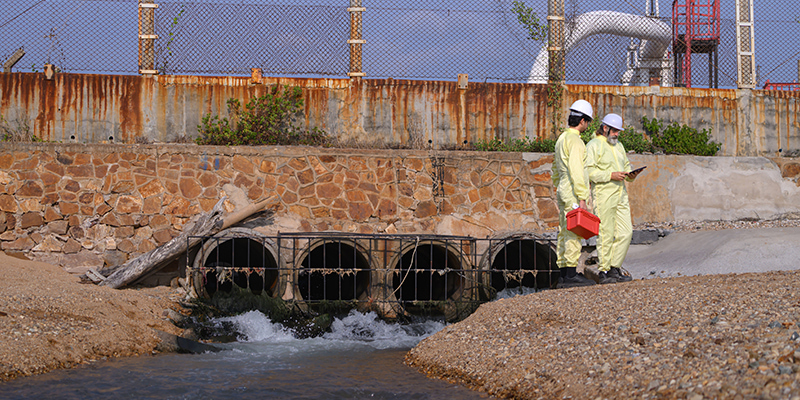
This will require a multifaceted approach, so infrastructure renewal and preventative maintenance will also reduce water losses and improve efficiency, preserving utility sustainability.
Accompanying regulatory and tariff reforms will also be critical to setting sustainable rates that cover operational and capital expenditures, enabling infrastructure investment and service quality improvements.
Additionally, public-private partnerships will be instrumental in financing large-scale projects such as desalination plants.
As CAWASA continues to advocate for these necessary shifts in the industry, its role will undoubtedly evolve as it supports the utilities in adapting to these changes. Under the guidance of such an organization, sector-wide progress, while challenging, is certainly ensured.
AT A GLANCE
Who: Caribbean Water & Sewerage Association (CAWASA)
What: A regional network and institutional support body for publicly owned water and wastewater utilities, facilitating capacity building, disaster risk management, technological integration, and policy advice across Caribbean islands.
Where: Headquartered in Castries, St. Lucia, serving utilities across the Caribbean region.
Website: www.cawasa.org/cawasa
DIG DIGITAL?