Building Resilience Across the Bahamas
With Innovation, Education, and Community Investment at Its Core, This Concrete Expert Is Reshaping the Future of Caribbean Construction Manufacturing.
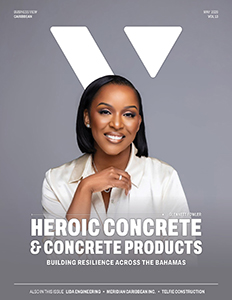
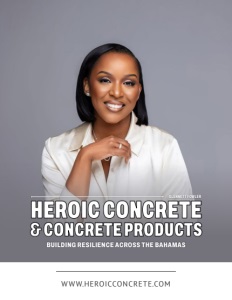
By the time Lynette Fowler speaks about concrete, it becomes clear she is not simply discussing a building material. She is talking about national development, economic resilience, climate adaptation, workforce empowerment, and the future of Caribbean infrastructure.
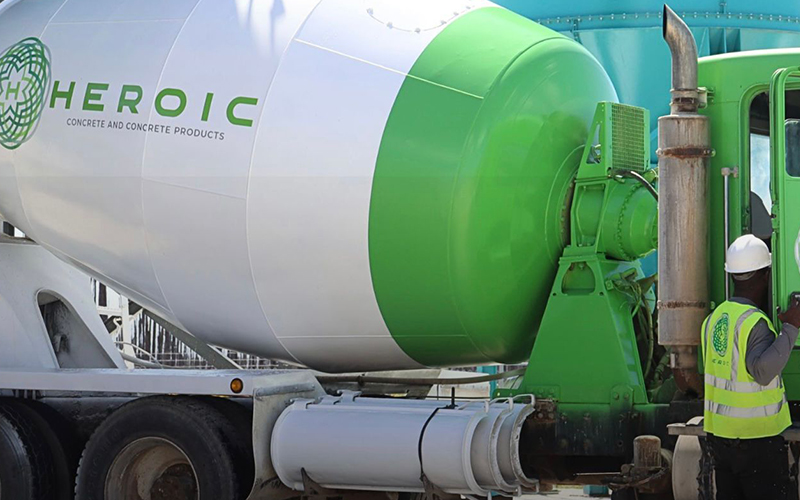
As President of Heroic Concrete & Concrete Products, Fowler has positioned the Bahamian company as far more than a supplier of ready-mix concrete and construction materials. Since launching operations following years of strategic planning and industry research, Heroic has emerged as a rising force in the region’s manufacturing and construction sectors, driven by a commitment to innovation, training, sustainability, and community partnership.
Operating from Grand Bahama Island, the company is part of the wider Heroic Group, which also includes logistics and maritime operations through Falco Maritime and Project Services. That integration gives Heroic a distinctive advantage in a region where supply chain challenges, island logistics, and import dependency can complicate construction timelines and project execution.
Yet for Fowler, the company’s mission extends well beyond operational efficiency.
“Once we are prepared to do the work, we can accomplish what we set out to do,” Fowler says. “It’s not an easy landscape in a small market, and it’s not an easy landscape in a bigger market. You have to put in the work. You have to educate yourself. You have to want to be better every day.”
That philosophy has become central to Heroic’s growth strategy as the company builds capacity to support major developments across The Bahamas and the wider Caribbean.
A Vision Born from Opportunity
The origins of Heroic Concrete can be traced back to the aftermath of Hurricane Dorian in 2019, one of the most devastating natural disasters in Bahamian history. In the wake of widespread destruction, Fowler recognized both an urgent national need and a long-term market opportunity.
Having already established herself through her maritime business ventures, she understood that construction materials would play a critical role in rebuilding communities and supporting the country’s future growth.
“A great amount of what’s needed for the construction that takes place in the country comes from imported items,” Fowler explains. “While we had a few manufacturers of concrete as well as concrete blocks and precast, we decided that because of the volume of construction that was set to take place over the next 10 to 15 years in the country, it would be a good aspect of our business to launch Heroic Concrete and Concrete Products.”
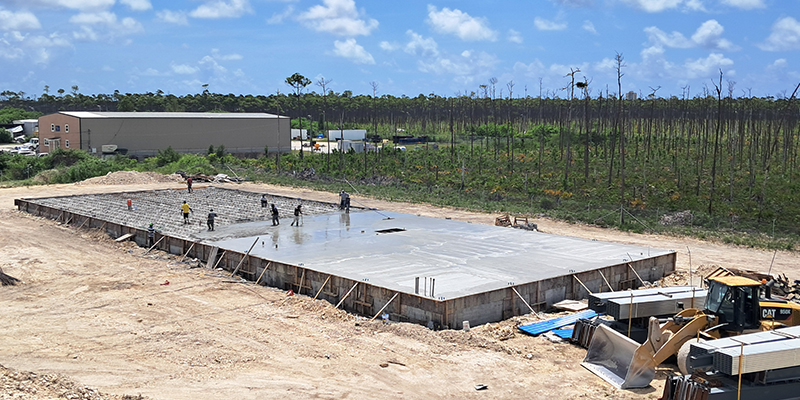
Rather than entering the market quickly, Fowler spent several years researching the industry, consulting with experts, and studying viable production models suitable for The Bahamas.
“So this would have been 2019,” Fowler says. “I would have spent about four years basically educating myself in that area and getting consultation with experts in the concrete industry, looking at the market, looking at what was viable for The Bahamas.”
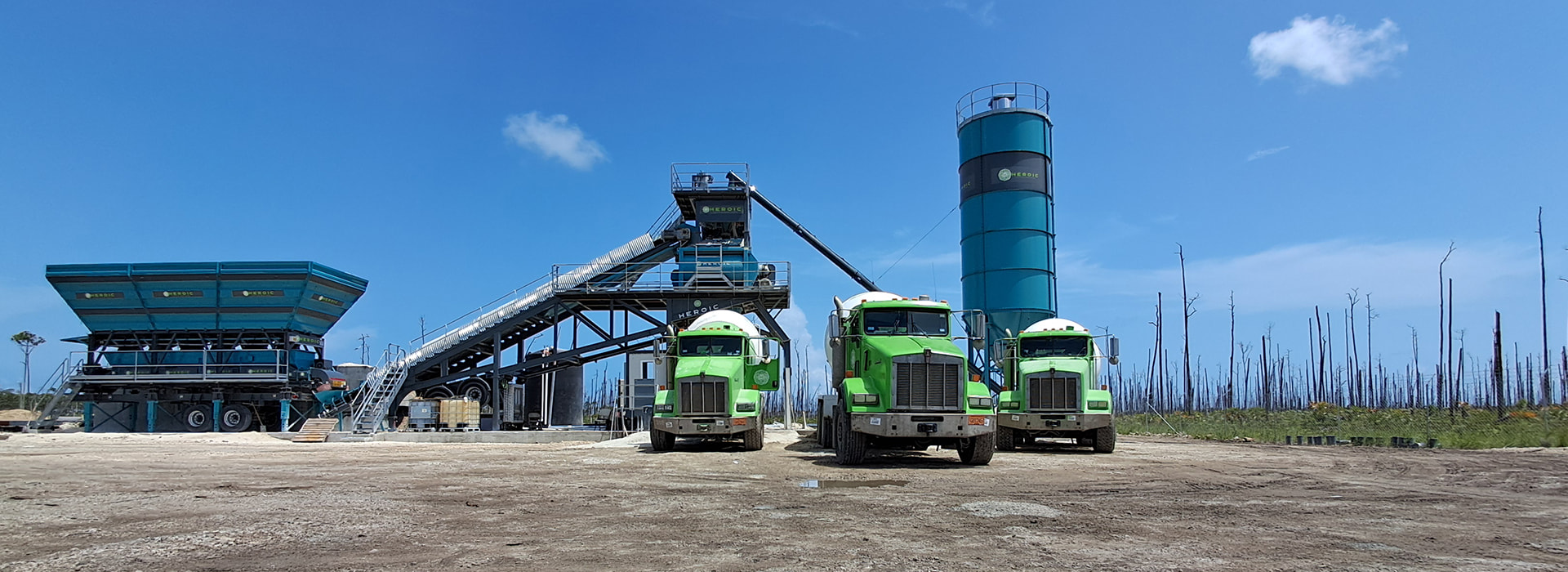
The result was a substantial investment in modern manufacturing infrastructure. Fowler raised approximately $6.4 million to build what she describes as a “state-of-the-art automated technology-savvy concrete division” designed to deliver consistently high-quality products to the market.
That emphasis on quality control, automation, and operational consistency remains central to the company’s identity today.
Innovation with a Coastal Focus
One of Heroic’s defining priorities is developing products specifically suited to the realities of island construction.
The Bahamas faces unique environmental pressures. Coastal erosion, salt exposure, hurricanes, and climate change all place extraordinary demands on infrastructure and building materials. Fowler believes the future of Caribbean construction depends on developing solutions that are not only durable but environmentally responsible.
“We initially aimed to provide green concrete, so a more environmentally friendly concrete, which is an aspect of the business that is our core,” Fowler says. “We want to have that particular type of mix in our product lineup because we’re a coastal country.”
The company is actively exploring sustainable concrete technologies and advanced admixtures that can improve both environmental performance and structural resilience.
Among the more innovative initiatives currently underway is the testing of admixtures developed using repurposed conch shells, an abundant waste material within the region.
“We just would have engaged with a local company that has been using some of the resources and some of the materials related to conch shells,” Fowler explains. “They have repurposed that resource and created an admixture that actually strengthens the concrete. It allows concrete to cure in a shorter space of time.”
Heroic is also evaluating systems that reduce or eliminate the use of potable water in concrete production.
For Fowler, these developments are part of a broader commitment to continuously challenge traditional methods.
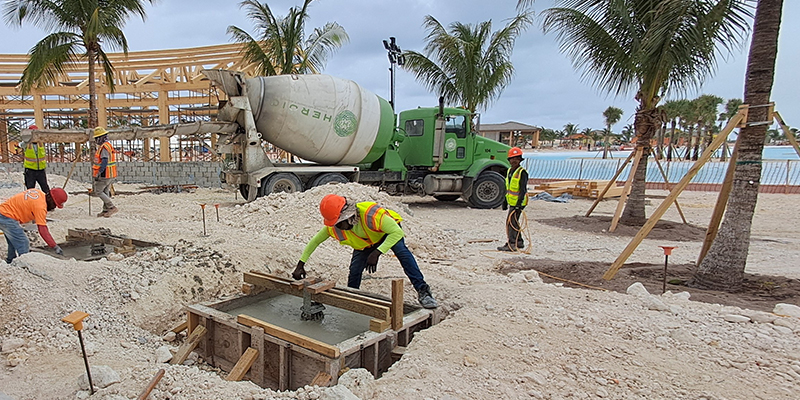
“While these things take time to transpire in the space, when you look at traditional construction and what people are comfortable with, we are still prepared to push the envelope as we look at being more climate-friendly as a world,” Fowler says.
Alongside material innovation, the company continues to modernize its operations through automation and technology integration. Heroic has incorporated robotic palletizing systems into its block plant and is actively investing in advanced operator training to maximize efficiency and reduce production turnaround times.
“We are always constantly looking at how we can improve those processes and put the people in place or the systems in place to do so,” Fowler says.
Raising Standards Through Education
While Heroic’s products are helping shape physical infrastructure, Fowler believes one of the company’s most important contributions may ultimately be education.
Soon after launching operations, Heroic introduced a contractor education and training series designed to provide local contractors with practical guidance on proper concrete usage, curing techniques, crack prevention, and project quality control.
The sessions were offered free of charge.
“When we first launched, we started a contractor series where we would bring persons in to educate them on how to use the concrete, how to avoid cracking, how to avoid failed inspections,” Fowler says. “I think that was a pivot for us.”
In a construction environment where many workers develop expertise through hands-on experience rather than formal academic pathways, Fowler saw an opportunity to bridge knowledge gaps and improve overall industry standards.
“Our regulations are not requiring you to have a formal college education per se,” Fowler explains. “You can actually be very experienced and taught through experience to build in our country. So there was a layer of education that we believed would be helpful in the market.”
That focus on knowledge transfer reflects Fowler’s broader philosophy regarding workforce development in The Bahamas.
She believes stronger collaboration between industry, technical schools, and higher education institutions will be essential to building long-term local expertise capable of supporting major international developments.
“How do we ensure that we have the amount of civil engineers we need or the amount of specialty companies or skill sets that allow an international project to come in here and be able to find and identify companies that can provide the level of work?” Fowler asks.
She points specifically to organizations such as the American Concrete Institute as examples of globally recognized standards that could help strengthen regional training and certification systems.
“In developed markets, it’s very clear,” Fowler says. “Defined protocols, material certification standards are enforced, and mechanisms are there to ensure consistency. I think this is a place where we’re still developing.”
Advocating for Industry Growth
As Heroic continues to expand, Fowler has also become an outspoken advocate for stronger industry frameworks and fair competition within the Bahamian construction sector.
She emphasizes that improved regulation should not be viewed as restrictive, but rather as a pathway toward greater accountability, higher standards, and stronger long-term industry growth.
“When you look at it from the basic level, how do you ensure that the consumers are, in fact, getting what they paid for?” Fowler says.
She believes there is room for additional oversight mechanisms that ensure building materials consistently meet required specifications while creating a more level playing field for local companies.
“I think there is space in that area for us to not criticize or hold anyone back, but to really allow persons who are aspiring to be in the space to operate integrally,” Fowler says.
Fowler also supports stronger partnerships between international developers and local contractors, arguing that foreign investment should help expand local expertise rather than bypass it.
“I’m not opposed to having persons come in at all,” Fowler explains. “But I think in the framework, they should be in a position where they must partner with someone because you have to ensure that the continuity of the workforce locally is also gaining experience and exposure.”
For Heroic, those principles directly influence how the company approaches partnerships and supplier relationships.
The company works closely with international suppliers and admixture partners such as Euclid while carefully vetting suppliers for testing standards, reliability, and long-term operational consistency.
“We want to work with suppliers and providers of services who also take quality seriously and who are committed to operating on an international level,” Fowler says.
Given the realities of island logistics and import dependency, Heroic has also developed regional supplier relationships to help safeguard project schedules and maintain product consistency during disruptions.
“What we’ve also done is establish relationships with other suppliers in the region who would be able to ensure we can get the deliveries,” Fowler says. “Our schedules are met, and we can maintain the same level of quality because we would have already vetted them.”
Building Community Beyond Construction
Community engagement is another cornerstone of Heroic’s operating philosophy.
For Fowler, business success carries an obligation to create broader social value, particularly within a smaller island community where economic opportunity can sometimes feel limited.
“I wanted to give our Bahamians the indication that once we are prepared to do the work, we can accomplish what we set out to do,” Fowler says.
That commitment has translated into several workforce and youth development initiatives.
In addition to contractor education programs, Heroic is launching a scholarship initiative aimed at supporting Grade 12 students interested in entering the manufacturing and construction sectors.
Rather than focusing exclusively on top academic performers, the scholarship will seek to identify motivated students who may lack financial opportunity or traditional academic recognition.
“Not everyone’s going to be a top achiever, and you don’t have to be,” Fowler says. “There’s a group of people who typically want to get somewhere, but they may not be very top of class, or they may not have an opportunity because of financial reasons, or they’re just not having the opportunity. We want to look at those segments of persons.”
The company is also investing internally in employee development through advanced training opportunities, including participation in American Concrete Institute programs and industry events such as World of Concrete.
“We’re looking at how we can better support our teams and provide them a culture that allows them to be at their best,” Fowler says.
Heroic’s community outreach efforts also extend into local schools, where the company plans to reintroduce volunteer programs focused on reading initiatives and facility improvements.
Meanwhile, the organization is exploring partnerships tied to affordable housing developments as part of its longer-term contribution to national development goals.
“We want to be what is best,” Fowler says. “How do we best improve the organization so that we can, in fact, contribute in a meaningful way to the long-term national development plans?”
Preparing for Regional Expansion
Looking ahead, Heroic sees significant opportunity throughout the Caribbean.
The region’s growing demand for resilient infrastructure, sustainable housing, and climate-adapted construction systems aligns directly with the company’s strategic direction.
“I think over the next five years, one of the biggest opportunities is really in the manufacturing and construction sector because you have to build resilient infrastructure and housing,” Fowler says.
Heroic’s logistics capabilities position the company to support projects across multiple islands, including areas where local production capacity may be limited.
“Not every island can, in fact, have a plant on it or can have production that happens for various reasons,” Fowler explains. “I think that we will have an opportunity to support or continue to support other projects on other islands.”
The company is already participating in projects in Eleuthera and exploring additional opportunities involving modular systems, advanced concrete technologies, and scalable production strategies suited to island environments.
Fowler believes population growth, tourism development, climate adaptation needs, and housing shortages will all continue driving regional demand for innovative building solutions.
“There’s going to be a greater demand for building materials, better systems in construction, more durable materials, more efficient means of construction, and what’s best suited for island environments,” Fowler says.
To meet that demand, Heroic plans to continue investing heavily in technology, research and development, operational systems, and workforce training.
“Consistent research and development is a big part of what I do,” Fowler says. “Looking at how our strategic plan needs to align with what the expectation is going to be five to ten years from now.”
For a company founded in the aftermath of a disaster, Heroic Concrete & Concrete Products has rapidly evolved into something far more ambitious than a materials supplier. It is becoming a platform for innovation, workforce development, and regional resilience.
As The Bahamas and the wider Caribbean continue adapting to changing environmental and economic realities, companies capable of combining local understanding with global standards will likely play an increasingly important role.
Heroic appears determined to be among them.
“Really innovation in materials, innovation in mix designs, innovation in coastal construction,” Fowler says. “I think that’s really what’s going to take us further down the road.”
AT A GLANCE
Who: Heroic Concrete & Concrete Products
What: The company is advancing sustainable construction solutions, contractor education, workforce development, and regional infrastructure support across The Bahamas and the Caribbean.
Where: Based on Grand Bahama Island in The Bahamas, with growing operations and project support throughout the region.
Website: www.heroicgroupbahamas.com
PREFERRED VENDORS/PARTNERS
Euclid Chemical Company : www.euclidchemical.com
Euclid Chemical provides advanced materials for concrete and masonry construction, including admixtures, fiber reinforcement, repair products, and decorative systems. Backed by technical expertise and innovation, we partner with customers to deliver reliable, high-performance results through responsive service, on-site support, and continuing education.
DIG DIGITAL?